

Unraveling Desire and Defiance: A Taste of The Vegetarian
“The feeling that she had never really lived in this world caught her by surprise. It was a fact. She had never lived. Even as a child, as far back as she could remember, she had done nothing but endure.”
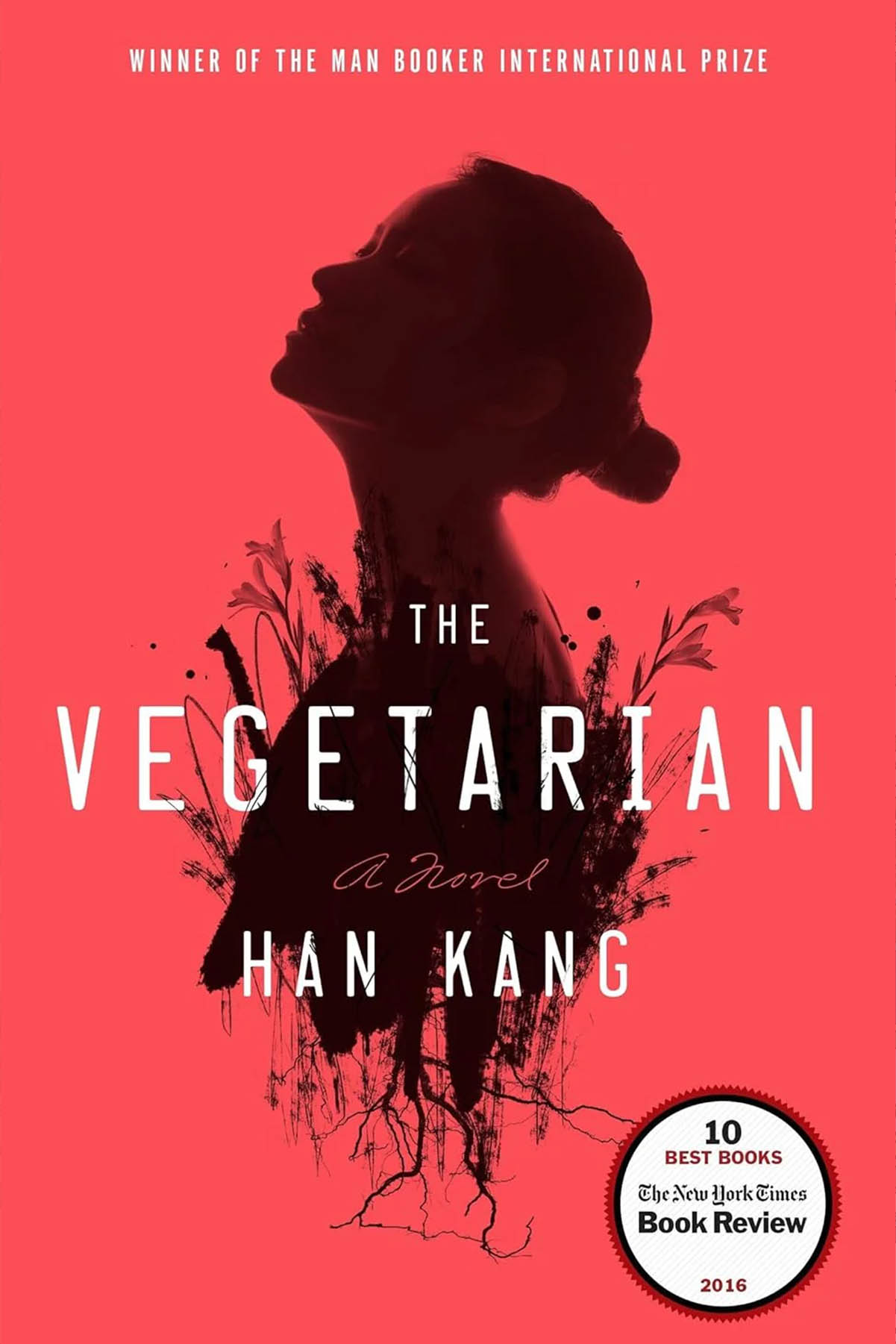
Perhaps one of the most disturbing books I’ve ever read, The Vegetarian by Han Kang (who just won the 2024 Nobel Prize in Literature!) and translated by Deborah Smith, is an undeniable literary masterpiece. Beyond that, I don’t even know how to begin describing this novel. I’m guessing that in a year’s time or more, it will still hold true that this was one of the most haunting, unsettling and tragic novels I’ve read in a long time. For a book that’s only 200 pages, there’s a great deal to think over and discuss. There are many different ways of looking at this besides what meets the eye. Don’t let the title fool you. This isn’t simply a book about a woman that renounces meat and animal by-products. It’s a story about autonomy over one’s body and one’s life and the repercussions of a lack thereof. It probes the harmful ramifications of patriarchal societies, violence, and victimization. It explores mental illness. I’m not even touching on everything here, there’s so much more, but I think if I went into everything I would have a 50 page essay.
The subject of this novel is Yeong-hye. She’s not actually given a voice here except for a few very brief passages, when she recounts the nightmares that led her to turn to vegetarianism. “Everything starts to feel unfamiliar. As if I’ve come up to the back of something. Shut up behind a door without a handle. Perhaps I’m only now coming face-to-face with the thing that has always been here. It’s dark. Everything is being snuffed out in the pitch-black darkness.” Instead, the book is split into three parts giving the perspectives of her husband, her brother-in-law, and finally her sister. We see how her vegetarianism, which later leads into a kind of manic catatonia, affects first her callous and at times sexually abusive husband, then her brother-in-law who becomes completely obsessed with her sexually because of her Mongolian mark, and her sister who is the last one standing when Yeong-hye’s psyche begins to peel away. Not for one second did I ever feel any sympathy for the men. That’s not to say that I wasn’t entirely absorbed by the first two sections, because I definitely was. What ultimately made the story for me, however, was the last section when we heard from In-hye, the sister. This was truly poignant and thought provoking. What makes one person suffer from mental illness while another does not? What about responsibility to another – how does that affect us psychologically? How do we protect those we love?
In addition to the serious topics that The Vegetarian brushed up against: the effect of cultural norms on women, body image, conformism, familial ties and abuse, and, of course, mental illness—this was also a tale of family dysfunction. It was a tale of familial ties that were severed painfully, of violent confrontations and realizations, of physical and emotional starvation, and a parable about the woman, the vegetarian, at the center of it all. “She was no longer able to cope with all that her sister reminded her of. She’d been unable to forgive her for soaring alone over a boundary she herself could never bring herself to cross, unable to forgive that magnificent irresponsibility that had enabled Yeong-hye to shuck off social constraints and leave her behind, still a prisoner. And before Yeong-hye had broken those bars, she’d never even known they were there.”
The Vegetarian was unconventional. It broke away from the molds that we find ourselves tied to in typical fiction. There is not the formulaic “rising action, climax, falling action” sequence that we’ve become so accustomed to, that we’ve grown to expect and to lean into, though we know how it’ll all end in the end. There may or may not have been some issues with translation, but if there were, it wasn’t overly noticeable to me. I would recommend this read to anyone who’s ready to move away from the conventional, and to anyone already familiar or ready to become familiar with this genre of writing. Honestly, this read left me a little speechless and I’m sure there’s more to say, I just can’t articulate it currently.
