

Turning Pages, Finding Peace: Days at the Morisaki Bookshop
“That’s where my real life began. And I know without a doubt, that if not for those days, the rest of my life would have been bland, monotonous, and lonely.”
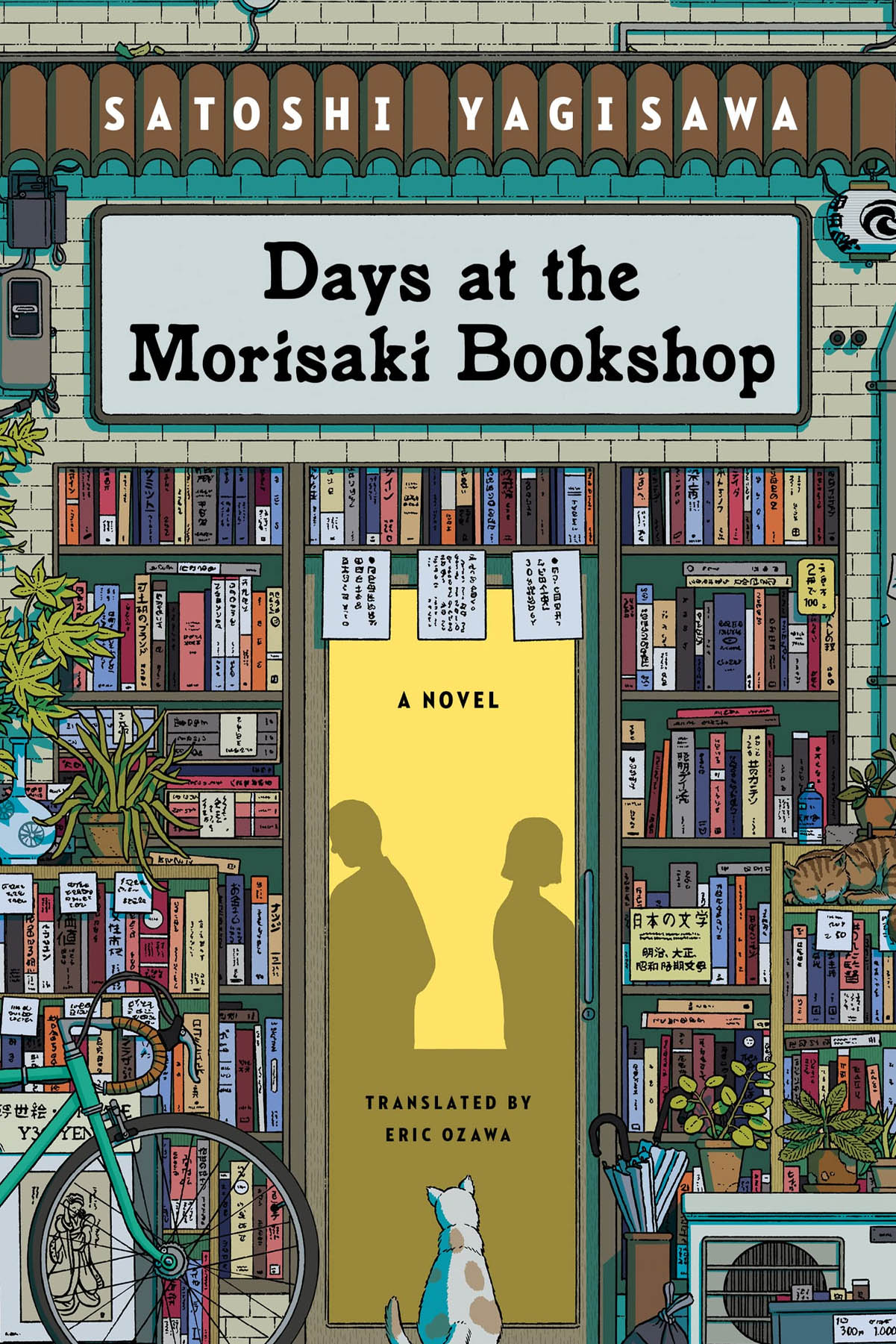
I’ve long been interested in world literature, but I have yet to break into the realm of Japanese literature. But, I’ve recently seen Days at the Morisaki Bookshop by Satoshi Yagasawa (translated by Eric Ozawa) all over my social media, so I figured it was time to give it a try. This book follows twenty-five-year-old Takako who takes up residence for a few months in her uncle Satoru’s second-hand bookshop in Jimbicho, Tokyo in the wake of her breakup with her boyfriend/coworker and her subsequent resignation. Depressed and unemployed, Takako is glad for the room above the Morisaki Bookshop to hide from the rest of the world even though she doesn’t quite enjoy reading. Surrounded by towering stacks of second-hand books and people who love reading, Takako eventually finds herself opening up to new experiences, making friends in the community, forging a bond with her uncle and finding joy, inspiration and hope in reading.
While the overall premise of the book sounds appealing, where this book fell short for me was the writing. There was some very unnatural dialogue at many moments, and descriptions that felt very much like the author was telling-not-showing. “The most delicious dish of all was the ayu sweetfish grilled with miso. After eating that with rice and miso soup, I was full, so I gave my hot pot and tempura to the men. Thanks to the relaxed atmosphere at the inn, there was a festive feeling in the dining hall. The men were both interested in mountain climbing, and they had been to this mountain many times.” While there isn’t anything particularly wrong with these sentences, it reads very monotonously. There isn’t any emotion or deeper feelings tied to this description; it’s simply a recounting of events. Honestly, it sounds a little bit like something fifth grade me would have written. Perhaps I would have overlooked these flat portions of the book if they didn’t pop up on numerous occasions, but I found myself struggling to read Days at the Morisaki Bookshop for more than 30 minutes at a time due to this. I’m not sure if this was because it is a translated work, and the translation caused the book to read weirdly, or if it’s simply just the original writing.
That isn’t to say it took me a long time to get through; this book comes in at around 150 pages, making it a very short read. It took me about a week to finish the book, and I did appreciate its brevity. Even though I didn’t love Days, it did help in getting out of a reading slump, and served as a nice gateway into reading longer books again (yes, my attention span is shot).
The narrative is divided into two segments the first of which focuses on Takano’s journey and the second segment, set a year later, revolves around her uncle and his wife Momoko whose sudden return five years after she left him has him seeking the answers to several unanswered questions. Her aunt’s return and their evolving friendship also encourage Takako to reconsider her own priorities. The narrative is evenly paced and compact but I thought the writing (or maybe the translation) was a tad choppy and lacking in depth. Though I didn’t enjoy the second segment of the narrative as much as the first, overall I didn’t dislike this short novel in its totality.
Touching upon themes of family, friendship, new beginnings and most importantly the transformative power of books, this is a sweet, simple story that would appeal to book lovers and bibliophiles. “No matter where you go, or how many books you read, you still know nothing, you haven’t seen anything. And that’s life. We live our lives trying to find our way.” I really liked the premise of Days at the Morisaki Bookshop, and loved the descriptions of the Jimbocho Book Town, and the individual, quirky bookshops, and the literary references. The author also references the Kanda Used Book Festival, the largest annual event held in Kanda’s Jimbocho secondhand book district that started in 1960, which I looked into a bit more and seems very interesting. My favorite part of the book was seeing Takako develop a passion for literature and grow out of her shell. As someone who loves literature, it was inspiring to see that love instilled in someone else.
