

Myths, Migration, and Mortality: The Layers of Signs Preceding the End of the World
“First there was nothing. Nothing but a frayed strip of cement over the white earth. Then she made out two mountains colliding in the back of beyond: like they’d come from who knows where and were headed to anyone’s guess but had come together at that intense point in the nothingness and insisted on crashing noisily against each other, though the oblivious might think they simply stood there in silence.”
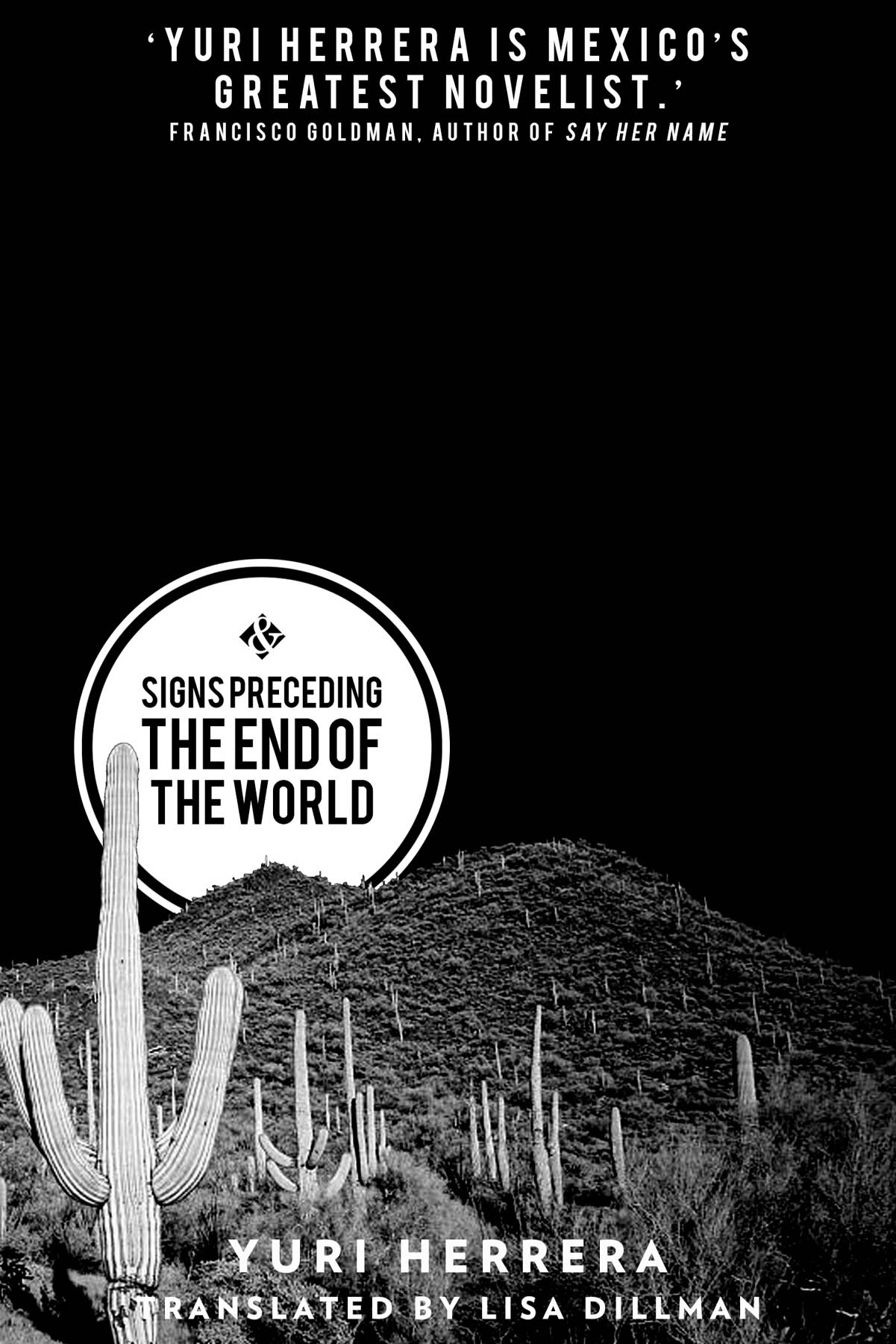
Following Makina as she makes her journey from Mexico to the U.S. border, Signs Preceding the End of the World by Yuri Herrera is a compelling story about boundaries and crossings. This is one of those stories where you do need a bit of background, as each stage of Makina’s journey to the U.S. mirrors a stage in the journey of life to death in Aztec mythology. In Aztec mythology, when Quetzalcoatl descends into the “land of the dead” (the underworld) his goal is to return the bones of ancestors to Earth to restore humanity. Towards the end of his journey, Mictlantecuhtli, the God of the underworld, sets a pit as a trap for Quetzalcoatl to fall into to prevent him from leaving the underworld. In the novel, we follow Makina (Quetzalcoatl) on her quest to illegally cross the border into the US (the underworld) to find her brother who went missing there and convince him to come back home.
This book is amazing, brilliant really. The style is heavy, especially at the start, so if you don’t develop a taste for it, just try and stick with it. The style lightens up, and the story is worth it. The prose seems to suffer from problems I kept blaming on translation. I believe Hererra intended these matters of translation, in part because Signs Preceding the End of the World is a story about the boundary between worlds and the languages that create them. The story is also about “versing,” a word that means to walk along the boundary of language, to meet each other there, but it can only mean that wondrous thing through an act of translation.
Signs Preceding the End of the World is not an easy read, given the jarring imagery and tone persistently throughout the novel, but it is rewarding. “I’m dead Makina said to herself when everything lurched: a man with a cane was crossing the street, a dull groan suddenly surged through the asphalt, the man stood still as if waiting for someone to repeat the question and then the earth opened up beneath his feet: it swallowed the man, and with him a car and a dog, all the oxygen around and even the screams of passers-by. I’m dead.” For sticking with Makina until her transformation, which isn’t exactly positive, but certainly potent, the reader gets a strong emotional pay-off right at the end. A story about a young girl navigating the borderlands, walking around as an undocumented immigrant in hostile territory makes for a surreal, fierce reading experience that I couldn’t stop until it was done.
Herrera uses some powerful stylistic choices that bring the novel to life and supply further commentary on his themes. Language, prose, and poetry is what can save us and etch our story into history. It is the sheer honesty of poetry that gets Makina through one of her toughest binds. This is a story full of dialect and colloquialisms that bring the story to life. “Makina had never seen snow before and the first thing that struck her as she stopped to watch the weightless crystals raining down was that something was burning. One came to perch on her eyelashes; it looked like a stack of crosses or the map of a palace, a solid and intricate marvel at any rate, and when it dissolved a few seconds later she wondered how it was that some things in the world — some countries, some people — could seem eternal when everything was actually like that miniature ice palace: one-of-a-kind, precious, fragile.” The dialogue that leaves off quotation marks and mashes multiple speakers words into a single paragraph only separated by periods to signify a change of speaker, as well as the indirect narration knitting Makina to the outside observer, create a world where borders, race, gender, heritage, language, etc. come together into simple humanity.
While an incredibly short read, Signs Preceding the End of the World is a moving and powerful read with profound messages concerning both physical and metaphorical boundaries.
