

Sips of Time and Loss: Reflecting on Before the Coffee Gets Cold
“At the end of the day, whether one returns to the past or travels to the future, the present doesn’t change.”
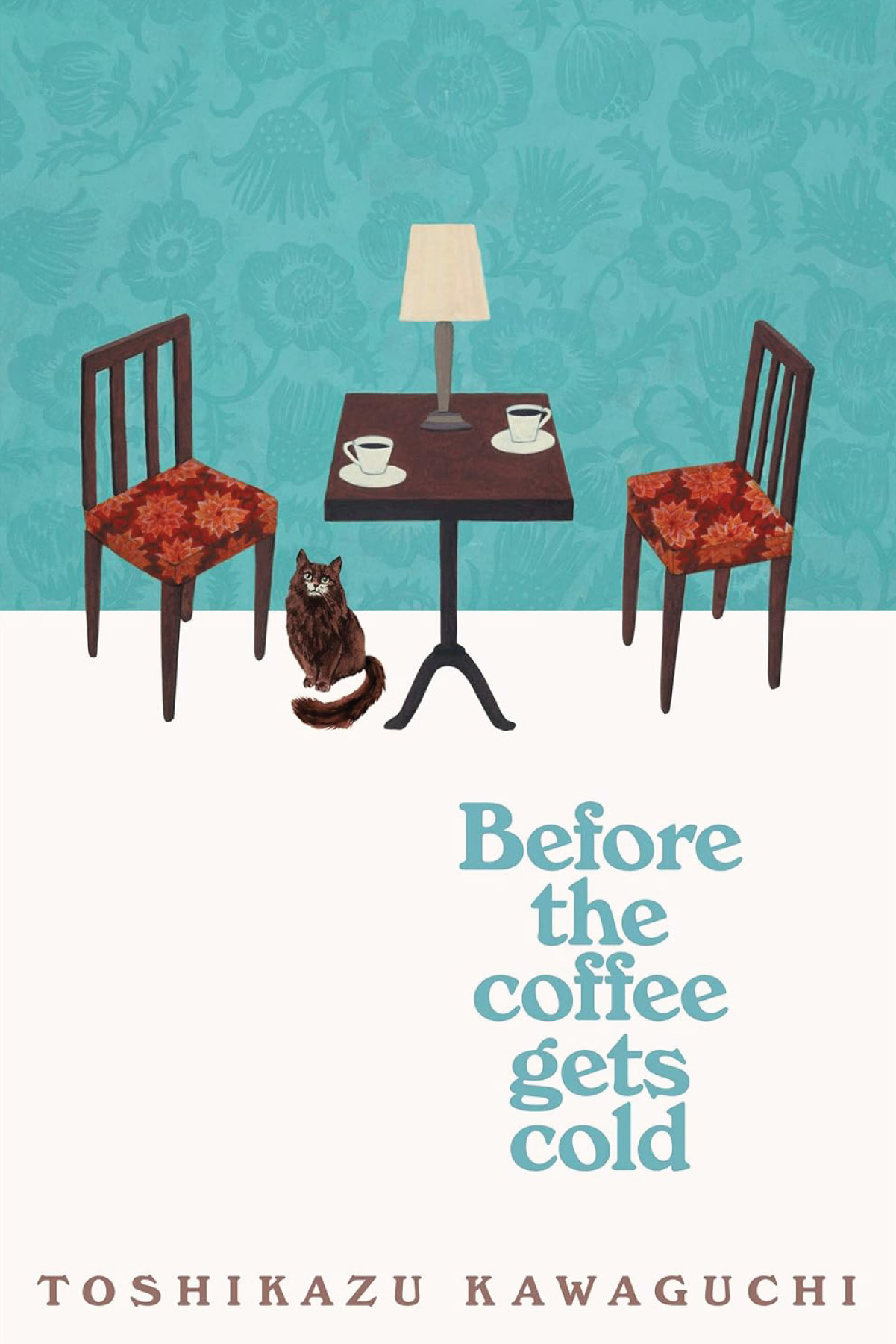
My second foray into the world of Japanese literature, Before the Coffee Gets Cold by Toshikazu Kawaguchi (translated by Geoffrey Trousselot), centers around the question What would you do if you could go back in time? In a tiny, overlooked coffee shop in Tokyo there is a single seat that allows the person occupying it to visit the past. The caveat? You can’t change anything that has already happened. We meet four visitors, each of whom wants to use this once in a lifetime offer in order to: confront the man who left them, receive a letter from their husband whose memory has been taken by early onset Alzheimer’s, to see their sister one last time, and to meet the daughter they never got the chance to know. Of course, there are risks that come with this venture. The first, most important rule: you must return before the coffee gets cold.
This book was heartbreaking in a quiet, almost gentle way. The way in which it approaches topics like loss is so unassuming, that it almost feels warm in an odd way. As you read about these characters, and the dire events that are destined to happen, events that cannot be changed, there is a sense of resignation that resounds through the pages. Despite the characters in this story being given a “second chance” to approach situations/people, the overwhelming feeling of knowing nothing can be done just hurts so badly. It felt so real, and being faced with reality sometimes feels a little too overwhelming, but as I mentioned before, the manner in which the author approaches this is so soft and so gentle.
However, this poignant message is undercut a bit by the writing. Before the Coffee Gets Cold was originally written as a play; Kawaguchi himself is a playwright, and I think this just doesn’t translate well into a book. Kawaguchi explains everything the characters feel, making the stories overly simple. “The man’s passive behaviour was infuriating the woman more and more.” This form of writing bleeds into the descriptions, where there are paragraphs describing the clothes a singular character is wearing, and it becomes very tedious to read. “Blessed with well-defined features and petite lips, she had the face of a pop idol. Her mid-length black hair shone and crowned her with a glowing halo. Despite her conservative clothes, her exceptional figure was easy to discern. Like a model from a fashion magazine, she was a beautiful woman who would draw anyone’s gaze.” I can easily visualize this book as a one-set play, but in its current form it gets very repetitive at times.
It has four different stories interwoven together with characters who have their individual existence yet perfectly complement each other. The overlying stories were beautiful and touching, yet in every chapter the rules of time travel and many of the same conversations are played out. Hearing and learning the rules is interesting when we meet the first woman who wished to time travel, but by the third or fourth iteration of these rules it becomes tiring. Almost all of the customers ask the same exact questions, and instead of skipping these conversations, Kawaguchi writes out near-identical responses in each chapter.
On a surface level, I enjoyed these stories and the little lessons woven into each narrative. It was bittersweet, endearing, and touching to see people from all walks of life try to reconnect with loved ones where they learn that they might not be able to completely fix the past, but they can learn from it and be touched by it. But, once I thought and reflected on the book, it became odd to me that all of these stories center on women who, in the end, have to give up something in order to make amends or attain something. In the first story, the woman’s boyfriend abruptly breaks up with her after three years, and yet she is the one who feels the need to go to the past and make amends, as if she has done something wrong. While it was delightful to read about the relationships in these stories, the odd gender dynamics definitely decreased my overall enjoyment of the book.
Overall, this book is not a must-read for me. The exploration of going back in time but unable to change anything was intriguing, but the writing and role of women in Before the Coffee Gets Cold were not for me. I seem to have a recurring problem with the writing in Japanese literature, and I’m not sure if I just need to read more, or if translation messes with the language used. Regardless, this book was a quick read, that contained emotional and poignant themes, but it is not a book I would recommend to everyone.
