

Colonial Shadows: Unpacking the Legacy in Loot
“I am here because you were there.”
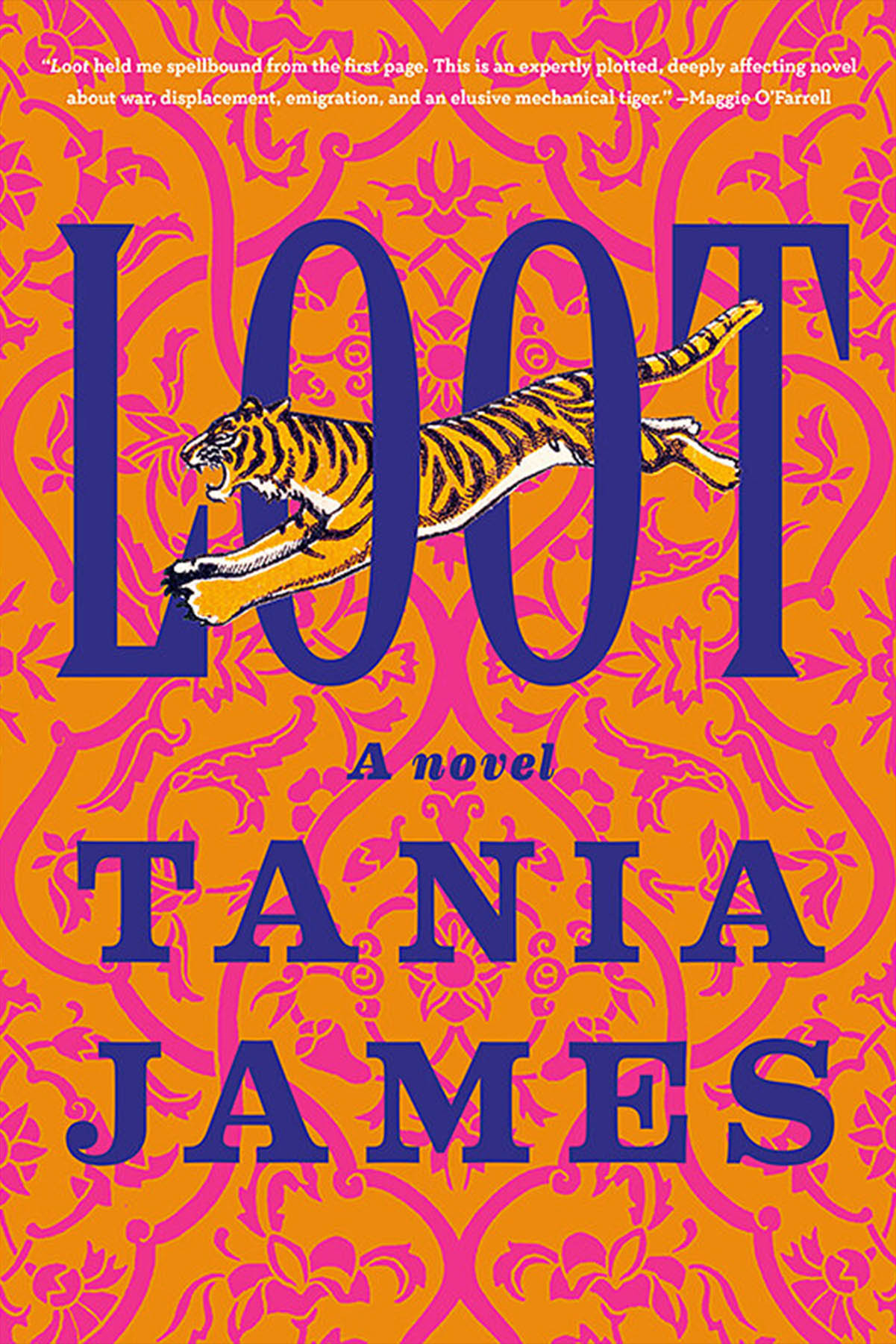
Loot by Tania James is a historical fiction novel that has an original premise. Set in Mysore, India during the late 1700’s, a 17 year old and talented Indian woodcarver, Abbas, and a French master clock maker, Lucien Du Leze, team up to create an automated life-size tiger which is mauling an English man. This is a stunning achievement for the time period. Not only is the tiger artistically carved and painted, but it can mechanically seem to bite the man underneath, while uttering growling sounds. The tiger was commissioned by the imperious Tipu Sultan – ruler of that region. Tipu sees himself as a tiger. To him, the automaton celebrates his victory over the English.
I have mostly mixed feelings about this book. That the narrative is primarily focused on this automaton allows the novel to explore themes that I don’t often come across, namely craftsmanship and the labor and skill that go into it, the countless hours of work that a finely made object requires. “The wood begins to lose its anonymity,” she writes. “He learns its fragrance and grain. Straightening the chisel, he knocks toward what he imagines to be a tiger, waiting to be unleashed.” The ideas and themes explored in this novel were well rendered, but I did feel that due to its length and breadth, some of the character development suffered for it.
The first part of the novel works because it is limited in scope and focus: we are focusing primarily on two characters, and those two characters have a specific task that they’re trying to accomplish. In that time, we learn about these characters and their dynamic, and so have reason to invest in them. Reading about Abbas and Lucien fascinated me, and I couldn’t get enough of them.
But, it starts to go off the tracks in the second half of the book. All the sections that followed this first one were lacking in either focus or scope or both. They are set in different times and places (the entire novel spans about a decade), with the novel jumping around from one character to the next, all of them feeling marginal and insignificant because they are never developed enough within the bounds of their very short sections. Unlike The Night Circus, which followed a similar format, Loot is unable to fully develop these side characters and many of them don’t really seem to matter at all. One thing she does do well with the characters, though, is that through their characterization, she makes a subtle commentary on colonialism, imperialism and displacement in a rich historical background without feeling heavy-handed. “Race,” James notes, “is the final ranking.”
Character development concerns aside, James does manage to include quite an interesting plot, filled with a stunning combination of a coming of age tale, a hero’s journey, and then a wild heist novel all at once, all packed into 289 pages. From India to France to England, the engrossing plot that revolves around stolen art and voyage reads effortlessly; and I was often dazzled by James’ lush prose. “The people never know who is coming from where to take what from whom. All they can do is submit to power each time it changes hands, each time the powerful decide to redecorate. This one wants a new calendar. That one wants his face struck on a coin. With every alteration, large and small, the ground unfirms itself beneath their feet, making it nearly impossible for anyone to leave a lasting mark.” The writing is lovely. It’s evocative without being wordy, simplistic but never dull.
Despite my issues with the character development, James crafts a beautiful story with such a unique premise. While the character development is sometimes neglected, the plot was so captivating I found myself willing to look past these issues to speed through the book in a single day. While it isn’t one of my favorites, Loot is definitely a book that should be on your TBR, if not for the plot than just for the amazing setting and its wonderful commentaries on British colonialism (and the beautiful cover)!
