

Howling at the Wrong Moon: A Critical Look at Women Who Run with the Wolves
“It is worse to stay where one does not belong at all than to wander about lost for a while and looking for the psychic and soulful kinship one requires.”
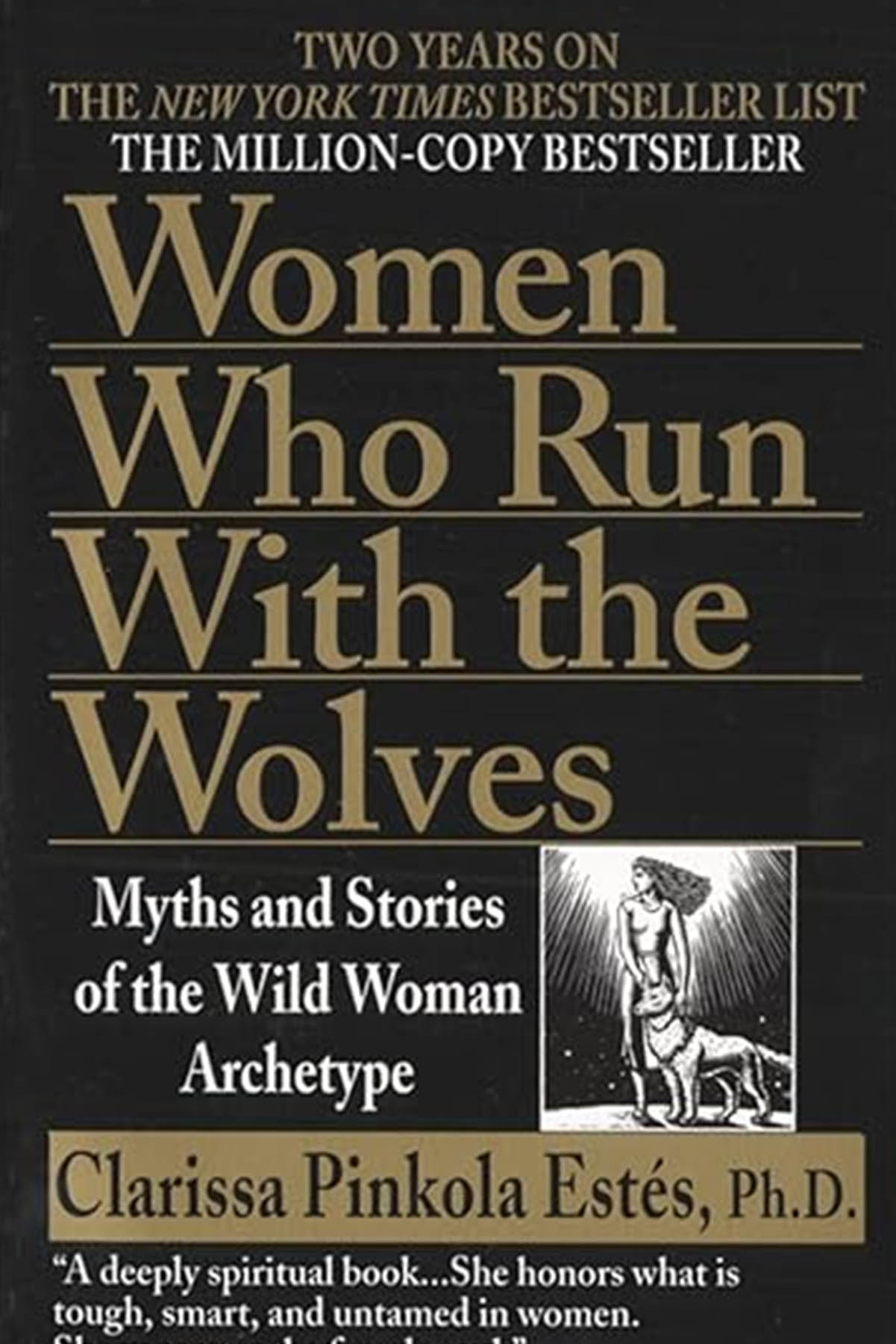
Women Who Run with the Wolves by Clarissa Pinkola Estés is unlike any book I’ve ever read, and not necessarily in a good way. In this book, Estés analyzes myths, fairy tales, folk tales and stories from different cultures to uncover the Wild Woman archetype of the feminine psyche. The book stems from these interpretations of old tales and creates this wolf-woman parallel, by incorporating her own previous studies that suggest “wolves and women are relational by nature.” The notion of the archetype is associated with the work of Carl Jung. Estés produces this new collection of words to describe the female psyche in Women who Run with the Wolves as it is supposedly a psychology of women in the truest sense, a knowing of the soul.
One of the main reasons I disliked this book was that I expected it to be a book about the literary and mythological archetype of the wild woman, and instead received a book filled with Jungian psychology. What’s worse, the book isn’t so much about Jungian psychology in general as it is about the author’s experience. I just get the feeling that this book was clearly written for the author, other women just happen to become “empowered” by her writings on wild women. And I understand wanting to reclaim wildness and all, but making essentialist claims about all women- even if they aren’t “negative” (or turning a negative into a positive)- is still annoying. And so is comparing women to (non-human) animals. These claims and comparisons may be an attempt to reclaim or subvert sexist ideas about women, but Estes seems to forget that women have been compared to and treated like animals throughout history, and that this has negative consequences.
Secondly, I think this book was remarkably tedious to read. Any book, no matter the intellectual thought behind it, should at the very least be somewhat entertaining to read. Women Who Run with the Wolves is full of enumerations, repetitions, and random Spanish or German words (which are then translated – every single time, even after the 500th instance) that do not enforce, but cloud the message the author wants to convey. I was very annoyed that most “messages” were covered in more metaphors than her stories. It felt like reading a horoscope- everyone can interpret her interpretations in a way that fits them. Also, her insistence on women being “creative creatures” that love to paint, sculpt and write (her favorite examples) felt sexist to me. I know a lot of women who would not identify as “the creative type”, and they have not “lost touch” with their psyche – they just do not fit in that tiny, neat little box this book provides. Additionally, there are just some very outright sexist things that Estés says throughout this book, such as, “…the young woman summons her psychic brothers. What do these represent in a woman’s psyche? They are the more muscled, more naturally aggressive propellants of the psyche.”
The author makes assertions and that is all. No evidence whatsoever is given to any of the sentences in any of the 500 pages this book has to offer. It’s all “All women are like this. She may think she is not, but it’s only because it’s hidden in her subconscious or she needs psychoanalysis.” The assertions-with-no-evidence just permeates the whole book, even the analyses of the stories, “the skull means her instinct” kind of thing. Why? Why can’t the skull mean her fears, her past, or just simply a literal skull? I can give different plausible interpretations to all of her stories and dreams. Furthermore, these assertions are highly repetitive. You could read the book just by reading the first sentence of each paragraph, because they all had circular logic/unnecessary illustration. The main point of the book comes down to: “Women are like wolves. Wolves are wild and women are wild so women are like wolves.”
Maybe I would’ve enjoyed this book more if I were going through some sort of identity crisis and needed someone to tell me how to live and what to be, because that is essentially what Estés does in this book. But, I am a 15 year old teenager, and I did not get anything useful out of this over 500 page book. I can recognize when I’m not the target audience for the book, and that was very much the case with Women Who Run with the Wolves.
