

When Worlds Collide: The Fragile Balance in Things Fall Apart
“Among the Ibo the art of conversation is regarded very highly, and proverbs are the palm-oil with which words are eaten.”
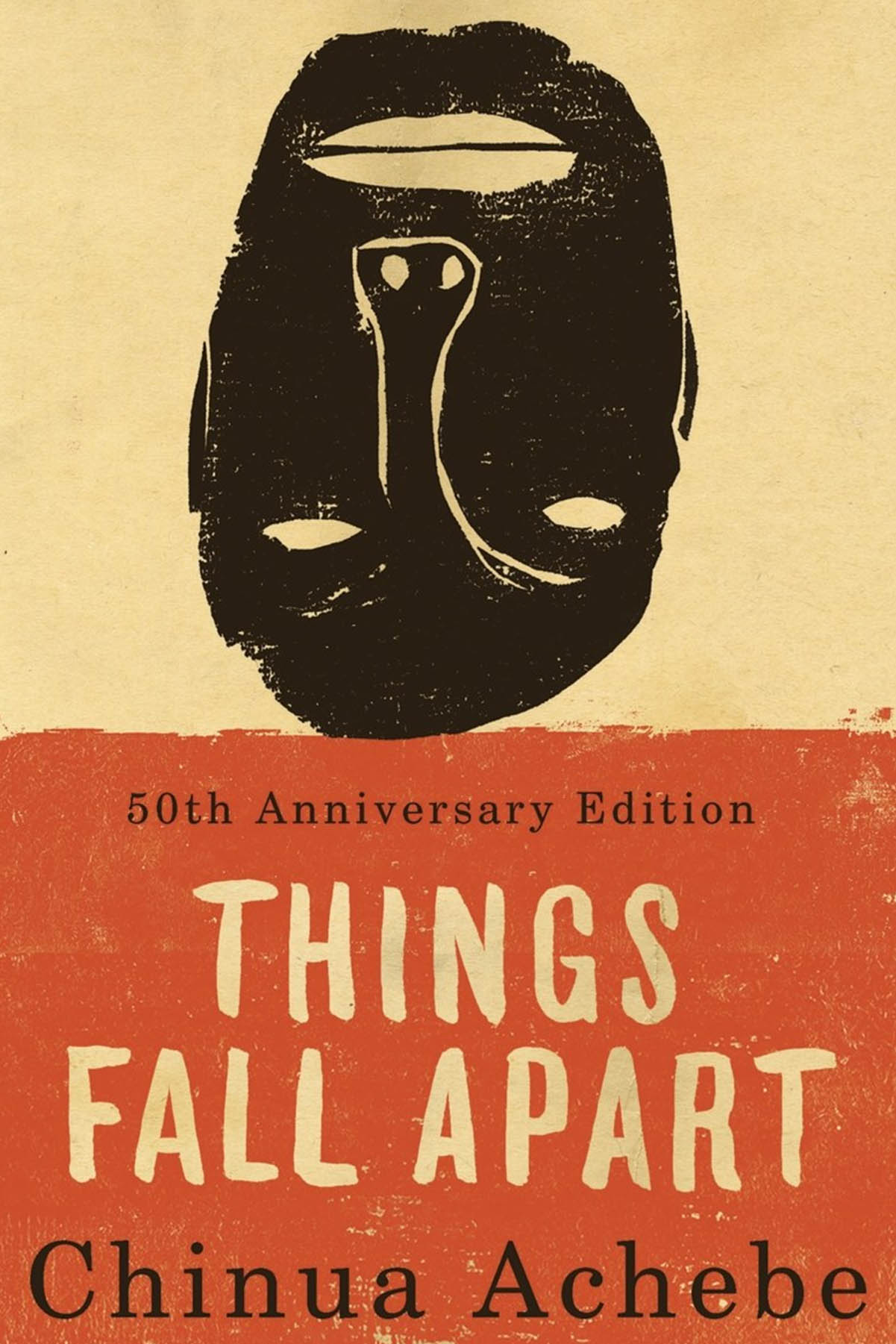
Things Fall Apart by Chinua Achebe is a book of many contrasts; colonialism and traditional culture, animism and Christianity, the masculine and the feminine, and the ignorant and the aware (although who is who depends on who’s speaking).
The novel is the story of Okonkwo and his tribe before and after the white colonizers appeared. Okonkwo is a physically strong man in the village, with many titles, land and authority. He loses no opportunity to show he is a real man; feelings and love are only weaknesses for him. He is domineering, sometimes beats his wives and is constantly tormenting his sons, pushing them to be men like him. An unlucky event puts his ambitions to become the most important person in the village on hold, but the “falling apart” comes with the white people, God’s missionaries. Okonkwo is one of the few villagers who want to fight the new religion and to remove the menace.
Okonkwo is one of the most intriguing characters I’ve ever read. He epitomizes so much I dislike; he’s abusive, misogynist, has very little patience or tolerance for the weak, and perhaps is even over-ambitious. He says to one of his sons, “I will not have a son who cannot hold up his head in the gathering of the clan. I would sooner strangle him with my own hands. And if you stand staring at me like that, he swore, Amadiora will break your head for you.” Despite all his faults, it’s impossible not to pity him a little because, after all, the life he knows, the life of his ancestors, is being taken from him quite cruelly by the British settlers.
This book really takes the reader into the Igbo culture. Achebe shows the traditional culture very well, a culture which is rife with superstition but rich in context. I loved the inclusion of the African proverbs and folk tales, and the details of the Igbo clan system. Achebe also shows how tight knit precolonial African culture was and how, despite not having the so-called civilized institutions, things went pretty smoothly because of the community spirit and also the societal rules. The importance of ancestors in society is a part of this. “The land of the living was not far removed from the domain of the ancestors. There was coming and going between them.” Achebe managed to inject some humor into such bleak subject matter. ”You grew your ears for decoration, not for hearing.”
There’s not a lot of plot. We watch as the main character struggles at first to become established. We learn about him and his family and the complex relationships of the tribe. While there are things that occur, the story doesn’t follow a typical plot arc. The point of this novel is to show how uncompromising the white man is. The Nigerian culture, the way of life for the tribe folk in this novel, is forced to change because if it doesn’t it will be destroyed in its entirety. The protagonist represents this; he has to deal with the crisis. He had a choice: he could either accept the white man’s way, and be changed forever, or he could stick to his own customs and, ultimately, fall. I think what Achebe is trying to portray here is the quietness of the African voice. It had no say. It doesn’t matter if the colonists were kind or brutal; it doesn’t matter what the Nigerian culture was like in terms of ethics. What matters is that it was taken away or shaped into something else entirely. This was not progress but assimilation. All culture has its flaws, that’s true for any society, but the white one, for all its self-aggrandizement, was nothing but imposing. And for Achebe this is the ruination of the voice he was trying to channel. “The white man is very clever. He came quietly and peaceably with his religion. We were amused at his foolishness and allowed him to stay. Now he has won our brothers, and our clan can no longer act like one. He has put a knife on the things that held us together and we have fallen apart.”
I think the best books are the ones that provoke some sort of deeper thought even after you’ve finished reading it. Things Fall Apart does a wonderful job at this. It has made me mull over questions of religion and spirituality, the effects of colonization, social pressure, masculinity, tradition vs. change, the role of women in traditional societies, fear of failing, family pressure, and so much more. If you’re looking for a classic to pick up, I would definitely recommend this one.
