

Shadows, Secrets, and Survival: The Dark Magic of Lost in the Never Woods
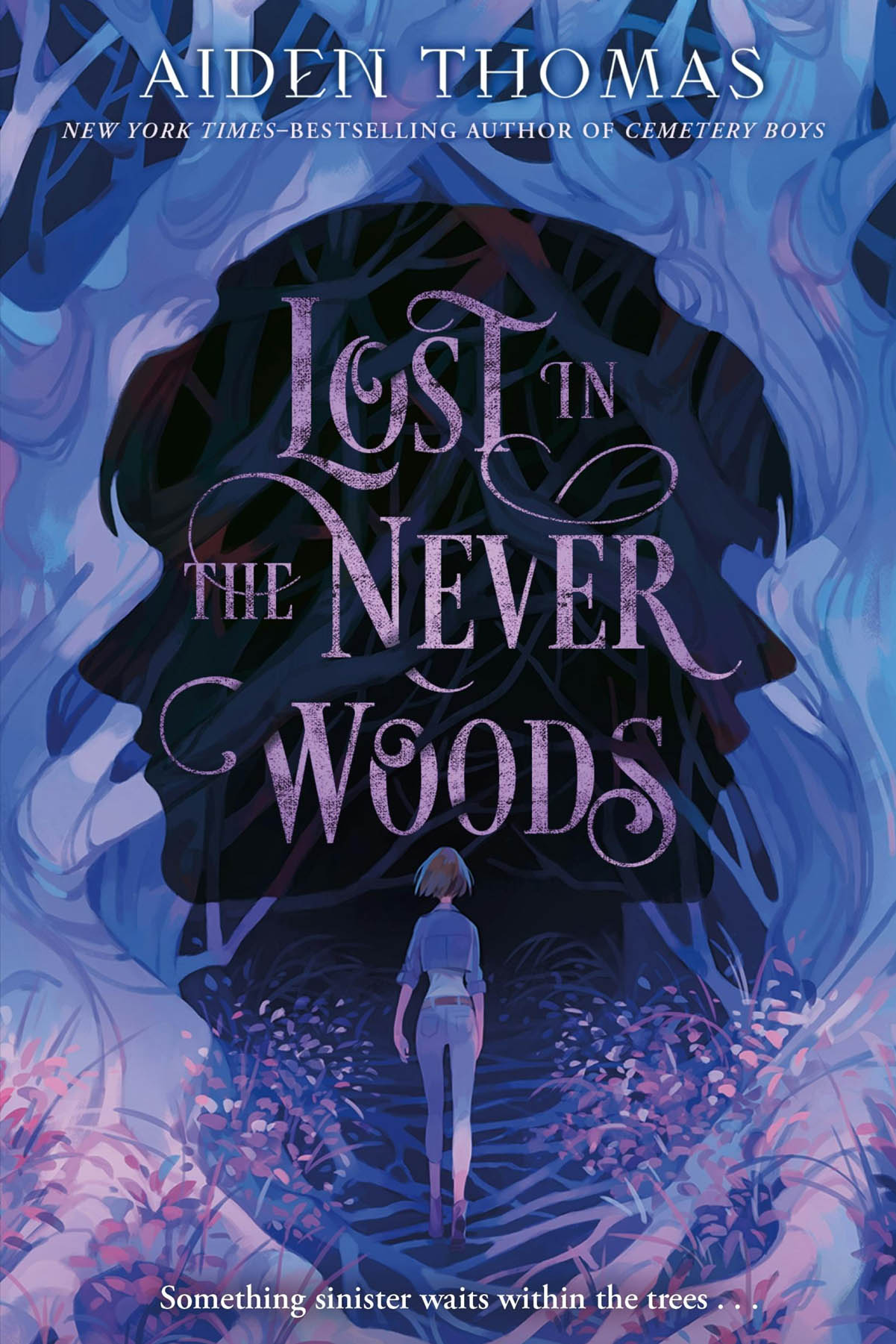
“I think people are more frightening than the dark […] A person can stand right in front of you and be dangerous without you even knowing it.”
Lost in the Never Woods by Aiden Thomas is a Peter Pan retelling. It follows Wendy, who went missing along with her brothers 5 years ago. But Wendy is found 6 months later alone and with no memory of what conspired in that period. As new cases of missing children come into play, Wendy is forced to relive her past and deal with her guilt and loss. At the same time, a mysterious new stranger Peter comes into her life who may hold the answers she seeks.
LITNW is a story that goes hard in the paint when it comes to exploring trauma, reactions to trauma, and mental health. Wendy is an extremely traumatized, extremely anxious person, who is still grappling with the disappearance of her brothers and how that’s completely shifted her family’s entire dynamic. While she’s surrounded by people who intellectually know what she went through all those years ago, very few people actually understand how she feels and how the situation haunts her. That desperation and uncertainty she feels really underpins the writing style of the story. It’s a narrative that moves quickly, almost frantically and leaves the reader feeling breathless with each new discovery and the terrifying implications of those discoveries.
I think that’s what makes the dynamic between Wendy and Peter so fascinating and so emotional. Peter represents magic, wonder, and in many ways safety, and Wendy is slow to trust him because everything he represents is just another unknown. Wendy is terrified and alone when the story begins, and she’s used to making herself small to make everyone’s life easier. But Peter is gradually breaking through her walls, offering her a potential connection to her brothers and her past, and sort of reintroducing her to wonder and joy. At the same time, he’s validating her fears and feelings, which she has always thought to be “irrational.” Peter also represents a chance for redemption, because Wendy has spent all this time harboring guilt over the fact that she couldn’t keep her brothers safe, especially since she sees it as her job to protect the people she loves.
She and Peter are very similar in that way. They see it as their responsibility to take care of others, even if it means taking on their pain, and they are both convinced that all the bad things happening in town are because of their own failings because they weren’t able to “be better” in some way. I think that really speaks to the lasting impact of trauma and nursing guilt instead of addressing it. I think the story also has a lot to say about how the act of growing up is almost traumatic in itself, because in many ways, growing up means learning how to be hurt, and Wendy and Peter are being forced to confront that pain in a very literal, magical sense. “But that’s what happens when you grow up—you forget about the magic you’ve seen.
To me, Peter and Wendy represent a reconciliation between pain and joy, and this evil shadow magic growing in the woods represents how pain is a living, breathing entity that grows stronger and strengthens its hold over us the more we feed into it. When we learn to extract joy from painful moments, hope from hardship, and love from loss, we become more powerful for it. That concept is what really struck me the hardest in this story, and I really appreciate how the story converts survivor’s guilt into power.
The writing was fairly simplistic, at least compared to Thomas’ other book, The Cemetery Boys, but it lacked the unnecessary, dragging descriptions that I’ve seen in many other books while still having wonderful imagery sprinkled in there. “But his intense eyes felt like they held the age of the galaxies swirling behind them. He was a star locked inside a boy’s body.” His writing creates a hauntingly beautiful story, that, while still retaining some of the child-like qualities from the original Peter Pan, also explores more mature, darker themes.
The premise is intriguing, the story is written well, and it kept me engaged for the most part, but while the first third of the book hooked me, the middle slowed down substantially, and the book felt like it was dragging on, with nothing substantial really happening. However, it does eventually pick back up with an unpredictable ending. I liked being in the same position as Wendy: you don’t know what happened with her brothers until the very end. There were some hints in the story as to who could’ve been involved, but it’s left a mystery until everything comes together for the conclusion.
Overall, I found this retelling dark, haunting, imaginative, and emotional. It’s a story of love and loss, growing up, facing your fears, and holding onto hope. There’s joy, there’s humor, there’s an impossibly tragic yet hopeful romance, but there’s also a really honest look at the hard choices survivors have to make and the destructive power of grief. While there were some supporting characters I wanted to see more from, I was still completely immersed in this creepy, atmospheric story and I was completely blown away.
