

Myths, Memories, and Identity: Finding Strength in The Woman Warrior
“We’re all under the same sky and walk the same earth; we’re alive together during the same moment.”
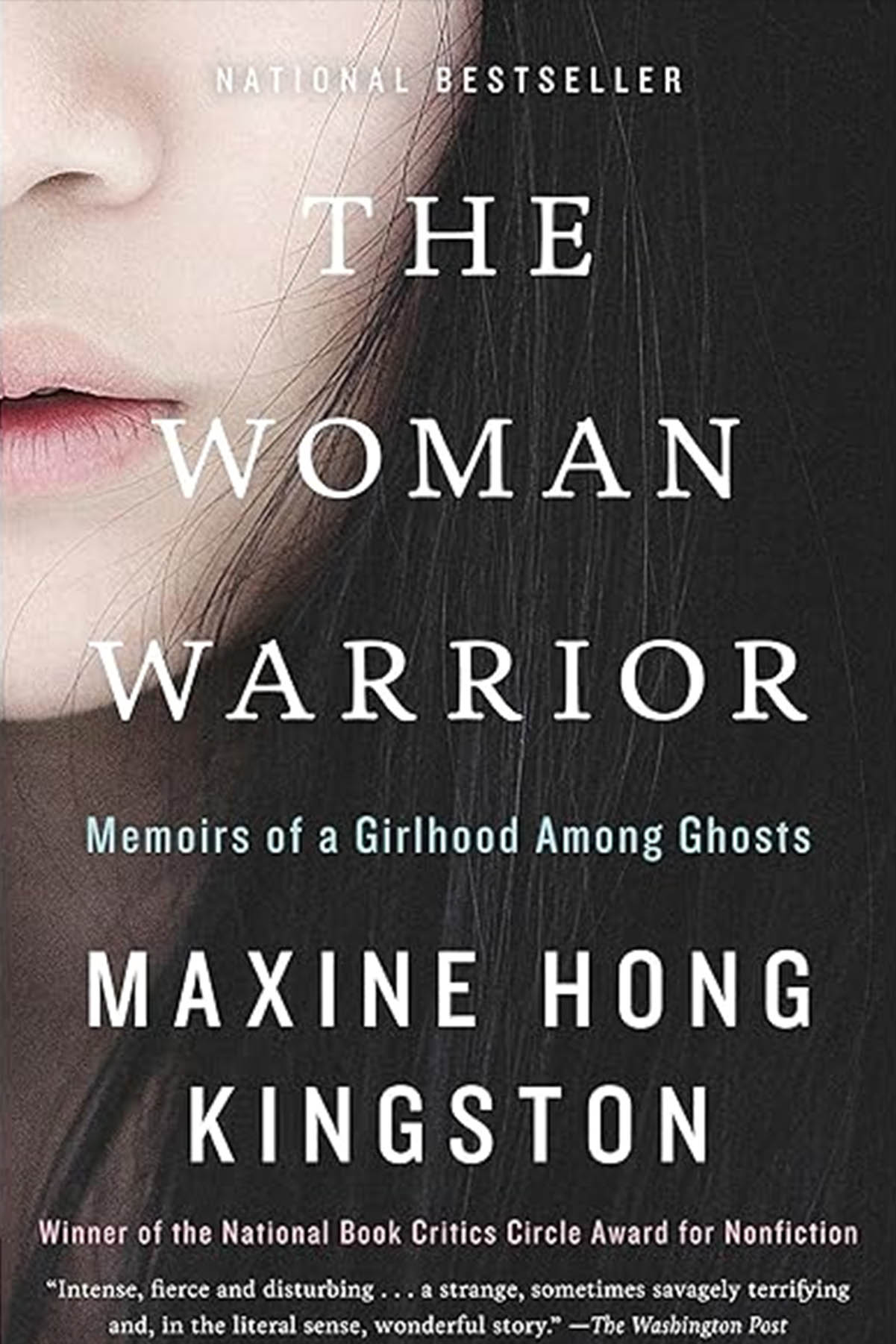
A five-part genre-bending work about immigration, class, and Chinese-American identity, The Woman Warrior by Maxine Hong Kingston brings to life a portrait of the author as a young woman. Mixing together myth and memoir, Kingston reflects on her childhood, the lives of her mother and aunts, and her awakening as a writer. All five parts share common themes, from the cultural gap between Chinese immigrants and their children to the effects of American racism. This book is an engaging introspection on Chinese-American girlhood and womanhood, as well as an exploration of what it means to cope with ongoing trauma and gendered terror through storytelling.
This was an intense book full of both women’s power and violence against women set against the backdrop of the Cultural Revolution and the emigration of many Chinese people fleeing Mao to California. The book talks of the China of her parents (she was born in the US after her father emigrated in 1940) using the voice of her mother and herself as well as a mystical woman warrior. It is highly poetic at times such as when Maxine’s grandmother (still in China) sends her sweet tastes telepathically, “How large the world must be to make my grandmother only a taste by the time she reaches me.”
The concept of identity is essential to this work as Maxine’s family is essentially country-less. Her family in China is nearly wiped out by the revolution and their remaining property is given to distant uncles that are still there. There’s a clear sense of isolation surrounding her family in the US, surrounded by “ghosts” as they describe the white people around them. “I could not understand ‘I’.The Chinese ‘I’ has seven strokes, intricacies. How could the American ‘I’, assuredly wearing a hat like the Chinese, have only three strokes, the middle so straight?”
The chapters mixing the narrator’s story with myth were my favorite (especially “White Tigers”). Kingston writes with such beauty and there are layers of meaning in her prose. “She was one of the stars, a bright dot in blackness, without home, without a companion, in eternal cold and silence.”Story-telling is also a priority here, along with the corresponding family dynamics and emphasis on cultural values.
This book requires committed reading, especially at the beginning where the line is blurry between reality and “talk-stories”, or cultural myths. This confusion is further complicated by Kingston’s use of the first, second and third person narrative voices. But the rewards are worth the effort, as we become part of her unique experience. “Those of us in the first American generations have had to figure out how the invisible world the emigrants built around our childhoods fits in solid America.”
The Woman Warrior is Maxine Hong Kingston’s own story of growing up Chinese-American, an irreconcilable position for her as the two cultures would seemingly clash, unable to provide her with a stable sense of identity. In it, she constructs her own identity and the meaning of her life. She places herself as the primary narrator in stories woven with Chinese myth and legend, including other women characters- some known and unknown, real and imagined.
