

Fragments of Existence: Searching for Self in The Hour of the Star
“I write because I’m desperate and I’m tired, I can no longer bear the routine of being me and if not for the always novelty that is writing, I would die symbolically every day.”
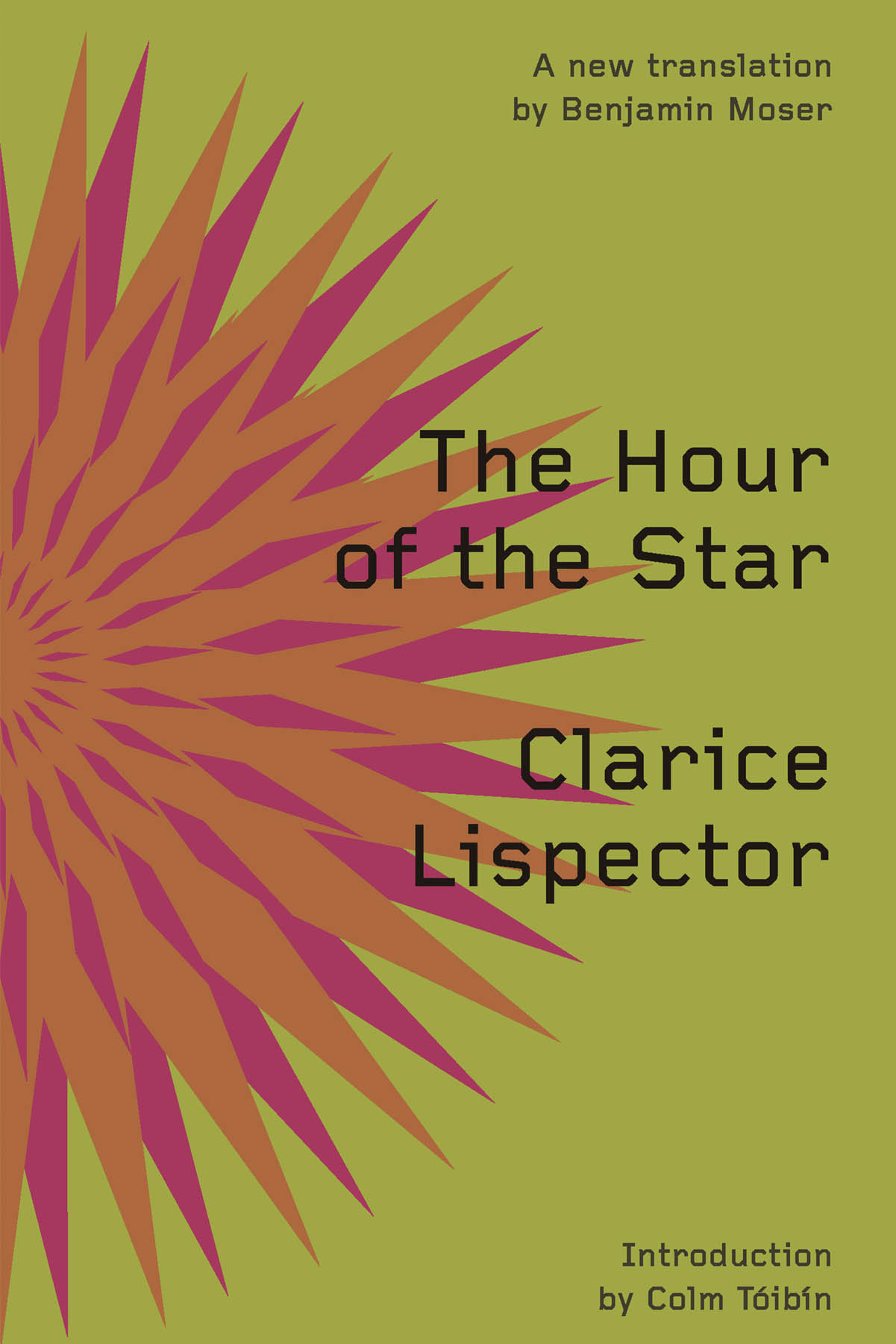
The Hour of the Star by Clarice Lispector is ostensibly about a poverty-stricken girl, Macabea. However, the novel is even more revealing of the narrator who chooses, or as he says, is forced to write about her. In some ways it also seems to mirror Lispector’s life. The book follows a tale of a woman from the state of Alagoas in the north-east of Brazil – the Lispectors first lived there when they came to the country – who then goes to live in Rio de Janeiro, as Clarice did. We read this story through the eyes of Rodrigo S.M., the narrator of the story. The narrator uses a form of intrusive narration in which the narrator speaks directly to the reader. It is a multi-faceted narrative which not only concerns itself with the life of the protagonist, but also the life of her creator, her god, her author. This is certainly not an autobiographical story; rather it is an exploration of self that is sometimes glimpsed, but barely known.
Throughout the story we are pulled into the narrative by this omnipotent, strange narrator but only to realize that we are still readers and cannot really intrude into the narrative. The narrative moves from a deep awareness about the tragedy of being alive to a sly allowance for the fact that existence is a comedy. The protagonist of the story sees her annihilation as some sort of unfulfilled existence which lingers somewhere between life and death wherein the soul could not be freed from existential curse even after death.
The Hour of the Star is a great work of endless interrogation in which the author, the narrator, the protagonist and the reader are interrogated by an ever changing and unreliable narrative. While the narrator in The Hour of the Star reveals to the audience his wish to ensure the novel’s simplicity (in terms of writing) and stray from philosophical tangents, the story is marked by complicated existentialist notions of identity. The author often reflects on his conscious effort to do so. “All the world began with a yes. One molecule said yes to another molecule and life was born. But before prehistory there was the prehistory of prehistory and there was the never and there was the yes. It was ever so. I don’t know why, but I do know that the universe never began. Make no mistake, I only achieve simplicity with enormous effort.” As the novel unfolds, it becomes apparent that this quest for identity is as much about Macabéa’s search for self as it is the narrator’s own. Notions of being, who we are and who we aren’t, and the struggle to find meaning are all touched upon. In fact, the book looks to be incomplete since it leaves so many questions unanswered. But this is exactly how it has been written- to question the very existence of everything, even that of the narrative or text itself which is being written about it; the book (and its narrative) is truly existential in nature.
I have a thing for deeply philosophical books, and though I’ve read many, this one struck a chord deep inside me. I think I resonate most with Lispector’s unique stylistic way of writing: stream of consciousness. While she certainly did not invent this form of writing, she executes it to near perfection. There are long rambling paragraphs that shift from topic to topic, in a way that should be confusing but instead reveal more about the story and the elusive narrator.
As a reflection on storytelling and the intricate net of relationships between authors, narrators, characters and readers, this is an outstanding masterpiece. I could quote every single page. It is also an impressive account of the different layers of human identity, and of how we establish what we are and why. “Who has not asked himself at some time or other: am I a monster or is this what it means to be a person?” It explores the question of truth, belief and reality. Sometimes lies are more decent and well-mannered than truth. Sometimes things exist only because we believe in them, and sometimes we ask forgiveness of beings we know do not exist, and we are forgiven.
