

A Thorny Disappointment: Why A Court of Thorns and Roses Falls Short
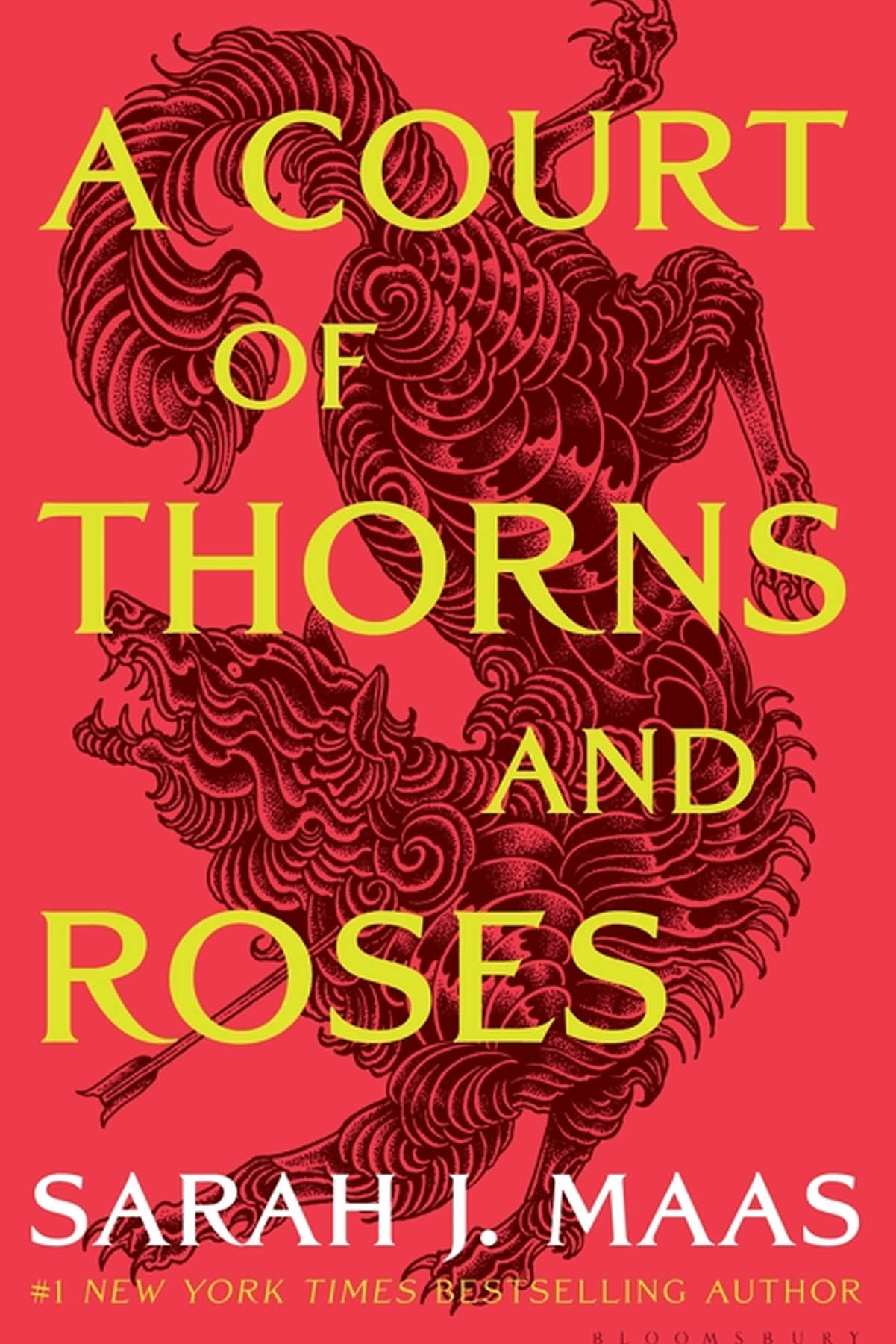
I went into A Court of Thorns and Roses by Sarah J. Maas expecting a wonderfully written, mind-blowing, high-stakes retelling of Beauty and the Beast. I got none of that. This book follows Feyre, a nineteen-year-old huntress who lives in a small village and hunts to provide for her father and two stepsisters. But, she makes the mistake of killing a wolf in the woods, who isn’t a wolf but a shapeshifting faerie. In return, she is dragged to a treacherous magical land she knows about only from legends. Feyre discovers that her captor is not truly a beast, but one of the lethal, immortal faeries who once ruled her world. As she adapts to her new home, her feelings for the faerie, Tamlin, transform from icy hostility into something new and confusing, and her perception of the fae world starts changing as she stays there longer and longer. But something is not right in the faerie lands. An ancient, wicked shadow is growing, and Feyre must find a way to stop it or doom Tamlin –and his world– forever.
While the plot certainly sounds entrancing and is ripe with potential, I was thoroughly underwhelmed by this book. My first problem was how irritating Feyre was. It’s clear that SJM attempted to make her a powerful female character, but she comes across as self-righteous, immature, and generally unlikable. Throughout this rollercoaster of a book, it becomes increasingly clear that the author could not decide who the character is fundamentally, and as a result, the reader is punished with what I can only describe as literature whiplash. The never-ending changes in opinion, attitude, and dialogue make it very difficult to maintain a sense of fondness or connection with the alleged heroin and instead provoke an opposite, more visceral reaction that I can only describe as general disdain or annoyance.
Feyre’s character development also makes very little sense; she begins the story as an extremely capable huntress, yet somehow ends up as a spineless damsel in distress. She’s willing to sneak into a fae ritual that she was explicitly told not to attend because it was dangerous, but the second she encounters a faerie she’s never met before she turns into a quivering mess. “I stood still, unable to speak through the fear that coursed through me.” This is a drastic change from the fearless character she was made out to be at the beginning of the book.
As if all of that wasn’t bad enough, I found the writing to be nearly unbearable. It was almost as if SJM attempted to fit as many convoluted metaphors and run-on sentences filled with flowery language as possible into a book. Here’s one of the numerous cringeworthy quotes scattered throughout the book, “A lick of cold kissed down my spine.” And not to mention the copious amounts of “he roared/growled/snarled’s” my eyes were forced to endure.
The pacing of ACOTAR is also far too fast. The reader witnesses only a few interactions between Tamlin and Feyre before we are suddenly told that they have fallen in love (I found this whole plotline to be very weird, considering that she was kidnapped by him.) Finally, when the climax occurs and Feyre faces off against the main antagonist, Amarantha, the fight scene is rushed and poorly thought out. Amarantha gives a riddle to Feyre instead of choosing to directly fight her, which if Feyre gets correct, will free everyone. The answer to the riddle is “love,” something which I found did not fit in at all with Amarantha’s character. While this was most likely intended to come off as empowering and give a final message of “love conquers all,” it felt like a cheesy, unsatisfying end.
The only redeemable thing about this book is the potential of the plot. I think that if this had been written a different author, this review would have been much different. But, overall I found this to be a bland, uninteresting, and annoying read.
