

Threads of Time and Spirits: Exploring The House of the Spirits
“…memory is fragile and the space of a single life is brief, passing so quickly that we never get a chance to see the relationship between events; we cannot gauge the consequences of our acts, and we believe in the fiction of past, present, and future, but it may also be true that everything happens simultaneously.”
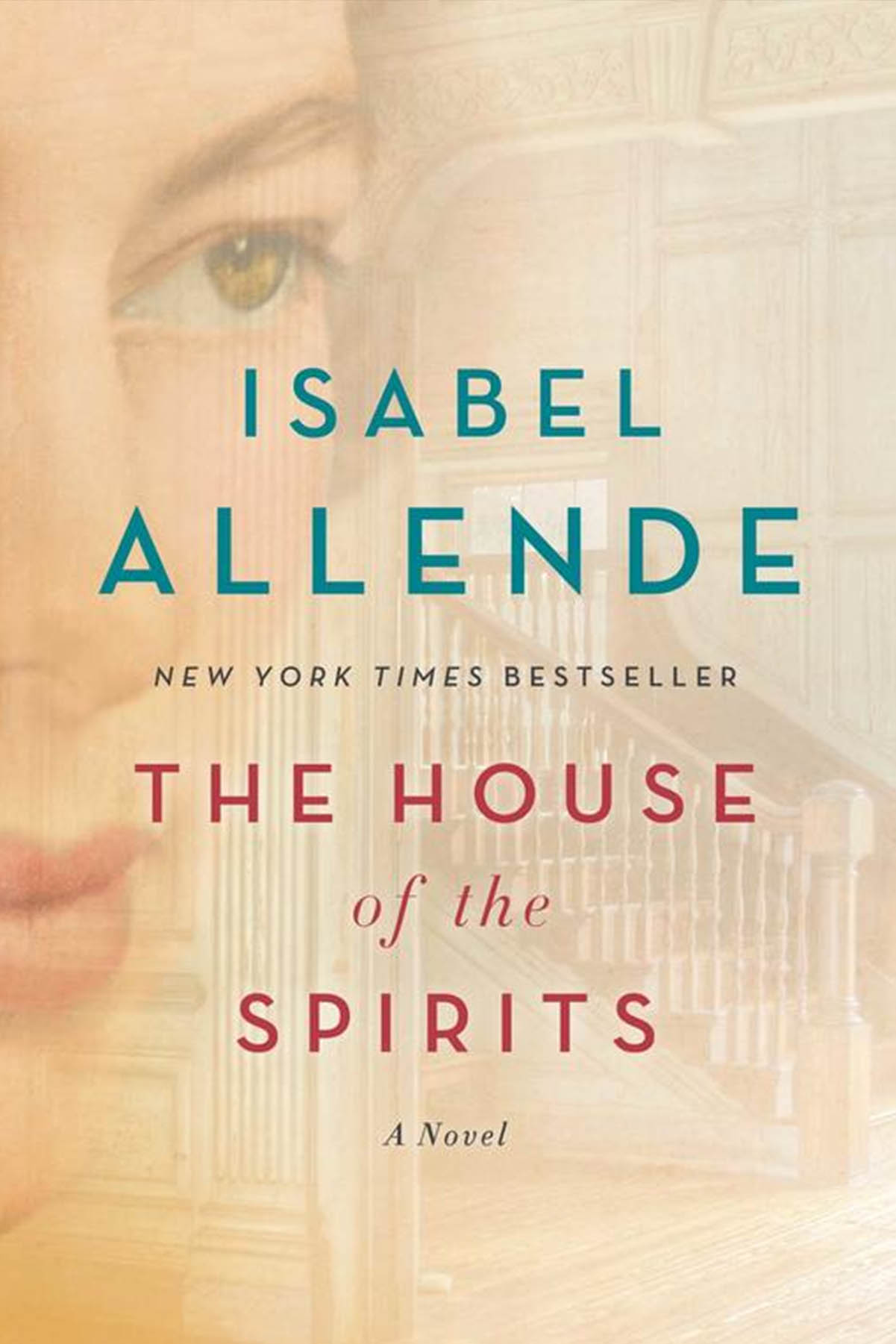
The House of the Spirits by Isabelle Allende is a rich family saga filled with drama, hardship, love, violence and a touch of magical realism. It is such an interesting story, spanning multiple generations and looking at the intricate relationships between the characters whilst the background features the post-colonial political struggles of Chile.
I love the beautiful and wild South American setting. I love the subtly woven aspects of magical realism. I love (and sometimes hate) the characters. I am fascinated by even the politics of the novel and the huge disparities between the women who campaigned for gender equality and those who believed a husband ruled over his wife. This book has everything: family, politics, love, magic. It’s layered, it’s complex, it’s beautiful. The imagery is some of the best I’ve read in quite some time. “He led her by the hand to the huge Venetian mirror that adorned one wall of their secret room, shook the dust from the cracked glass, and lit all the candles they had and arranged them around her. She stared at herself in the thousand pieces of the mirror. In the candlelight her skin was the unreal color of wax statues. Miguel began to caress her and she saw her face transformed in the kaleidoscope of the mirror, and she finally believed that she was the most beautiful woman in the universe because she was able to see herself with Miguel’s eyes.” It’s the story of three generations of strong women– Clara, Blanca, and Alba, in a world where women aren’t supposed to be strong.
We come into the characters’ interconnected tales almost as interlopers, peeking in on their inner lives from a covert window laid by the principal narrator. It is a combination of different accounts: a cut-and-paste project of secondhand and thirdhand experiences, along with a minimal smattering of the firsthand, collected via journal entries, correspondences, and true to its title, the testimonies of spirits. Thus, there is already that imposed distance—we can never truly live or feel or “get into the heads” of its players (except for one). But we can watch. I never felt that I was there, with the characters, but I was still there, observing the characters, with undisputed access to their thoughts.
Allende tells the story through two perspectives, a combination of third person omniscient interspersed with first person accounts from Esteban’s viewpoint. I was unsure of the reason for this rather jarring choice until the end when it became apparent. This book seemed to me like two books in one. The first two-thirds employs beautiful prose in depicting how a family changes over time. This section establishes the many characters, along with their traits and motivations. It took me a while to get grounded in the story. It meandered a bit and I wondered where it was headed. The last third morphs into a political commentary based on Allende’s personal connection to Chilean history. The pace picks up and it becomes action-packed, though extremely violent.
My favorite character has always been Ferula. I find her the most tragic character and the one most buried beneath layers of complexity, even though she isn’t ever really the novel’s main focus: “She was one of those people who are born for the greatness of a single love, for exaggerated hatred, for apocalyptic vengeance, and for the most sublime forms of heroism, but she was unable to shape her fate to the dimensions of her amorous vocation, so it was lived out as something flat and gray that was trapped between her mother’s sickroom walls, wretched tenements, and the tortured confessions with which this large, opulent, hot-blooded woman – made for maternity, abundance, action, and ardor – was consuming herself.”
I would be remiss in writing a review about The House of the Spirits if I failed to include Allende’s stunning prose. I’ve read many authors with a spectacular way with words, but Allende somehow surpassed all of this. The way in which she weaves her sentences together was so brilliant, I found myself stopping to highlight sentence after sentence so I could go back and witness the beauty of her words. “Clara’s childhood came to an end and she entered her youth within the walls of her house in a world of terrifying stories and calm silences. It was a world in which time was not marked by calendars or watches and objects had a life of their own, in which apparitions sat at the table and conversed with human beings, the past and the future formed part of a single unit, and the reality of the present was a kaleidoscope of jumbled mirrors where everything and anything could happen.”
It’s quite a magical story, with some mystical elements but is mostly grounded in the harsh reality of the world in which they live. I didn’t connect the story immediately, and in general I always felt a bit outside the story, like I was observing rather than living through it with these characters.
