

Survival, Secrets, and Tragedy: Salt to the Sea
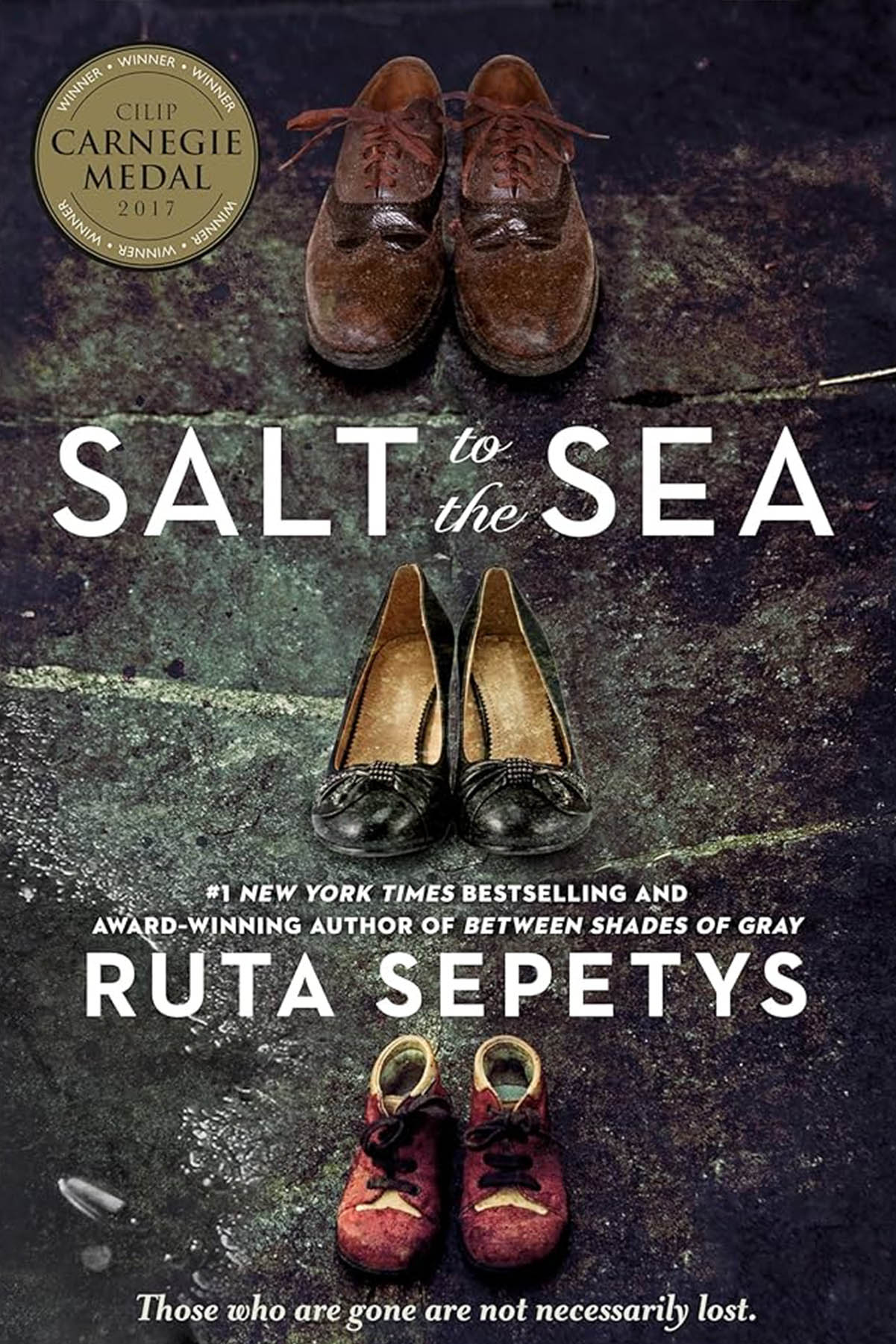
Salt to the Sea by Ruta Sepetys takes place in the winter of 1945 during World War Two. From four perspectives, we get four stories and four secrets. War has taken over the world and has forced millions of refugees out of their homes and into the hands of chaos and tragedy. The story begins with all these different characters, for different reasons, all trying to make their way to docks, where they hope to board a ship that will take them to safety. But in order to get there, they first have to survive a dangerous journey on land through enemy checkpoints, under fire from all sides, in danger of becoming victims of the brutal winter, in the middle of one of the largest wars in history.
One of my favorite parts of this story wasn’t something to do with the actual plot, but instead the length of the chapters. I have an extremely short attention span, so having these 2-5 page chapters was extremely helpful, and kept me hooked throughout the whole book. Even though these chapters were so short, they still were extremely intense. This style of writing also gets rid of any unnecessary things, everything has meaning and drives the story forward.
I also found three out of the four characters fascinating. Florian, a Prussian with a mysterious letter of passage, Joanna, a Lithuanian nurse, and Emilia, a Polish teenager who’s eight months pregnant, all had unique perspectives. I loved reading their chapters, and seeing them as they connected on their journey together. They go through so much, and become quite close, which is why the ending destroyed me. It was interesting to see their different perspectives and how the three characters experienced the situations they were in differently.
However, the fourth character, Alfred, infuriated me. The first thing I would change is Alfred’s whole plot line, and preferably his mere existence. He was a German soldier, who was extremely dedicated to Hitler’s cause. He was a narcissistic, delusional, sociopath, who was obsessed with serving Hitler (who didn’t even know he existed.) He painted himself as this great hero, even though he spent most of his time in supply closets. And it wasn’t just that he was such an avid follower of Hitler, he also crafted love letters in his mind to a girl named Hannelore. Hannelore was his neighbor, and he basically stalked her every move (she also didn’t know he existed.) When he asked her out and she said no, Alfred revealed to the Hitler Youth that Hannelore was part Jewish. Thankfully, he accidentally killed himself by slipping on the ice of a lifeboat because he was so disgusted that he was in the presence of Emilia, who had been hiding her identity of being Polish.
The second thing that I would change is how little time was actually spent on Wilhelm Gustoff. The book was advertised as being focused around the tragedy of the ship, however the main characters only get on the ship about 75% of the way through. Most of the book is centered around the journey to get there, and the hardships Florian, Joanna, and Emilia face. While it was interesting to read about this, I just felt like this book was a bit falsely advertised as focusing primarily on the maritime disaster of Wilhelm Gustoff.
Possibly the most interesting thing that I learned from this book was about the Wilhelm Gustloff, the ship that everyone in this book was trying to get on. This ship had been equipped to carry 1,463 people, and on the day it drowned it was carrying over 10,000. It is estimated that about 9,400 people died, and to put it into comparison, 1,503 people died when the Titanic sank. However, this tragedy is barely talked about, in fact I didn’t even know about it until reading this book. This is most likely because it occurred during wartime, and the majority of passengers on the ship were German soldiers.
I would definitely recommend this book to anyone who loves to read historical fiction, specifically World War II books, and anyone who wants to cry. However, I know some people wouldn’t like the pacing of the book, and the short chapters. Also, this book dealt with some extremely serious issues and topics, and would definitely make a lot of people cry.
Overall, this was by far one of the best historical fiction books I’ve ever read. It was fast-paced and action packed, yet still taking the time to focus on important details. The writing and style of Salt to the Sea is flawless, and like no other I have ever seen. However, I don’t think I’ll be reading it again, mostly because of how much the ending destroyed me. I’ve read over 30 books this year, and this is among the best of them. I think the thing that made Salt to the Sea so unique is how the author weaved the different perspectives of the characters together, creating a seamless story.
