

Leveling Up Through Love and Loss: Tomorrow, and Tomorrow, and Tomorrow
“There’s no hope. There’s no reason to keep trying. Because you must. This is not hope. Not reason. This is your fate. This is your life, what you must do.”
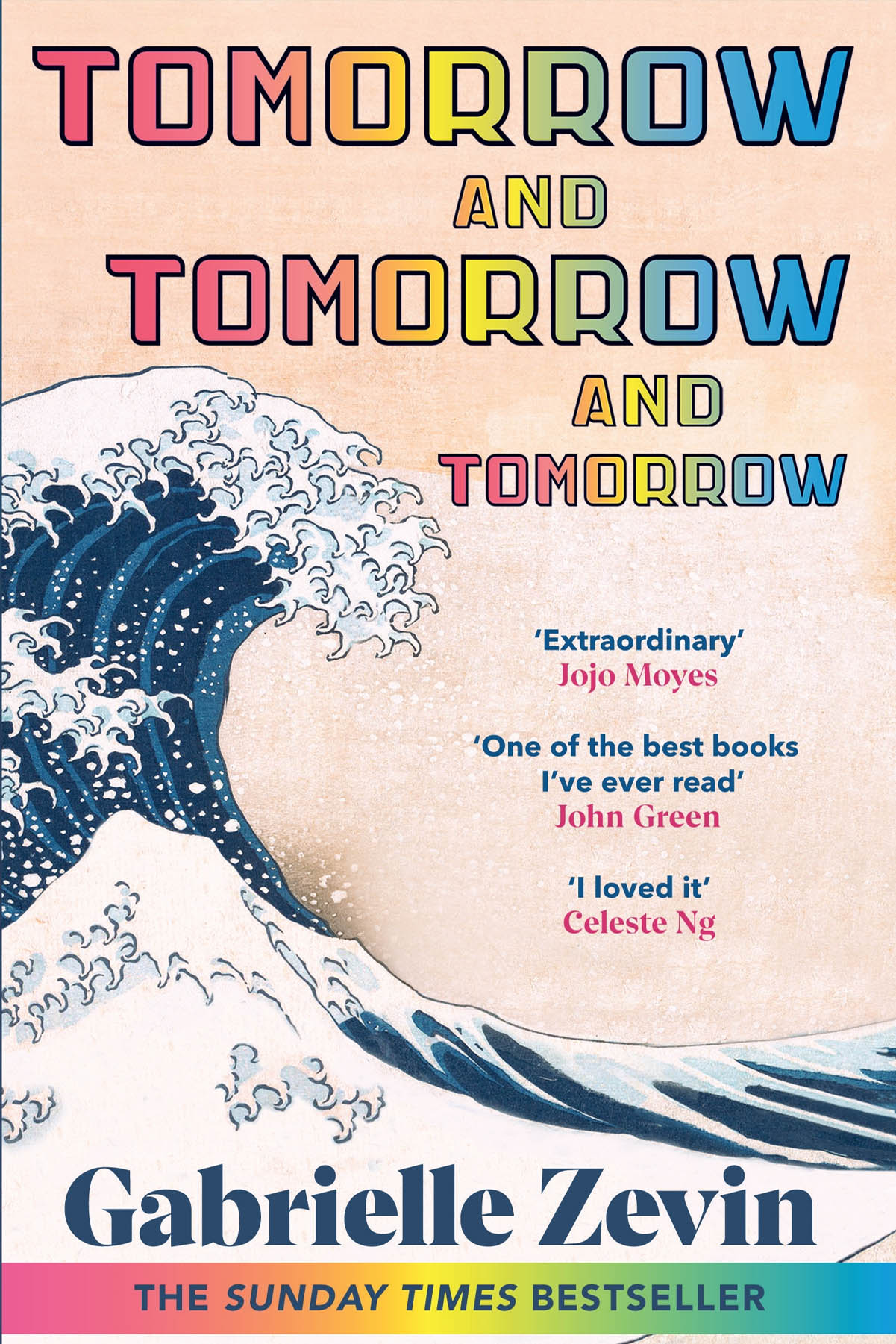
Tomorrow, Tomorrow, and Tomorrow by Gabrielle Zevin centers around Sam and Sadie who met when they were kids and quickly bonded over their love of video games. They develop a friendship that spans almost 30 years. The novel follows the highs and lows of their friendship, including falling in love, falling out, a love triangle, successes, and failures. Throughout it all, the one constant in their lives is video games.
The narrative alternates primarily between Sadie and Sam’s POVs. Sam and Sadie are both loveable, arrogant, infuriating, and flawed. The lives of Sam and Sadie are raw and complicated and messy. The narrative is such an accurate depiction of human growth and the adjustments friendships have to go through because of those changes. and, just like real life, not everything goes according to their plans. There were life choices of theirs that I didn’t agree with and moments when I was 110% rooting for their successes. The dynamics of their friendship are complicated by love, jealousy, and misunderstanding. I got a little sick of the friends to frenemies cycle between Sadie and Sam. I loved them, but I also wanted to shake some sense in them. It seemed that almost every 20 pages they got into another fight, most of which stemmed from miscommunication. While I loved the ending, I did feel that the book dragged on a bit and I got bored in some places with the uneventfulness of their careers. However, there were many chapters where I was riveted by the worlds they created and I couldn’t stop reading.
This is very much a character-driven novel. While there is somewhat of a plot, the central focus of the book is on Sam and Sadie, and how their intensely complicated relationship with each other develops over nearly thirty years, and bleeds into all other aspects of their life. I, for one, need to have well-developed characters to appreciate a book, and Zevin does a phenomenal job of making you truly feel for Sam and Sadie. I felt a lot for Sam and his struggle with his disability and Sadie with her experiences of sexism in the video game industry and in life generally. Their struggles with identity penetrate every corner of this book, and make it so much more relatable and real. “The alternative to appropriation is a world where white European people make art about white European people with only white European references in it. Swap African or Asian or Latin or whatever culture you want for European. A world where everyone is blind and deaf to any culture or experience that is not their own. I hate that world don’t you? I’m terrified of that world and I don’t want to live in that world, and as a mixed race person, I literally don’t exist in it. My dad, who I barely knew, was Jewish. My mom was an American-born Korean. I was raised by Korean immigrant grandparents in Korea Town Los Angeles and as any mixed race person will tell you– to be half of two things is to be whole of nothing.”
As someone who doesn’t game, and didn’t grow up in the 1990’s-2000’s I did find some of the jargon confusing, but I was willing to ignore it in favor of the rich narrative beneath it. “If this were a game, he could hit pause. He could restart, say different things, the right ones this time. He could search his inventory for the item that would make Sadie not leave.”
Tomorrow, and Tomorrow, and Tomorrow, is a multilayered novel about friendship, love, and video games. I don’t think there’s a better way to sum up the novel than with this quote: “What is a game?” Marx said. “It’s tomorrow, and tomorrow, and tomorrow. It’s the possibility of infinite rebirth, infinite redemption. The idea that if you keep playing, you could win. No loss is permanent, because nothing is permanent, ever.”
